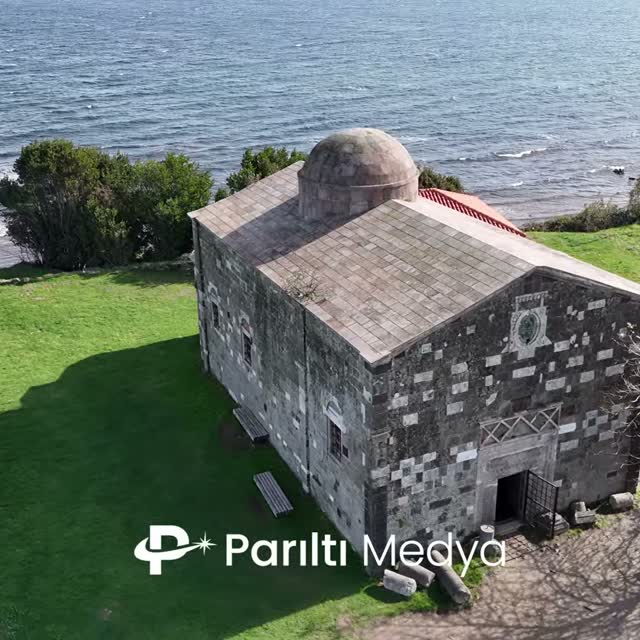
Jason Church (Yason Kilisesi), Ordu
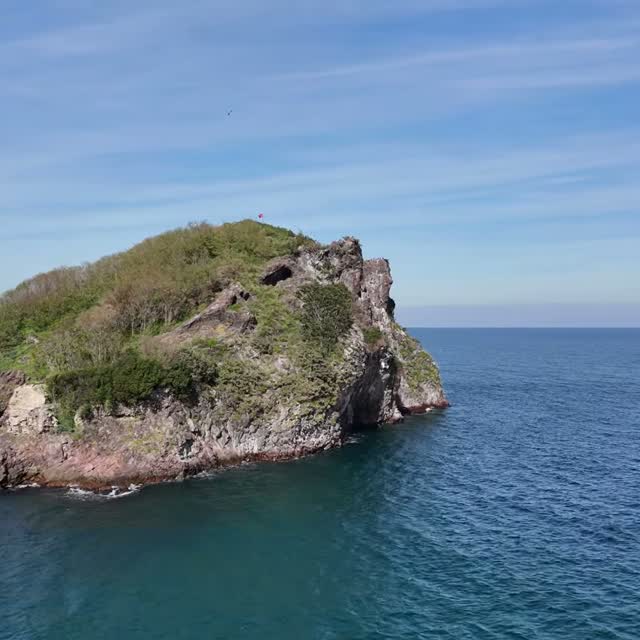
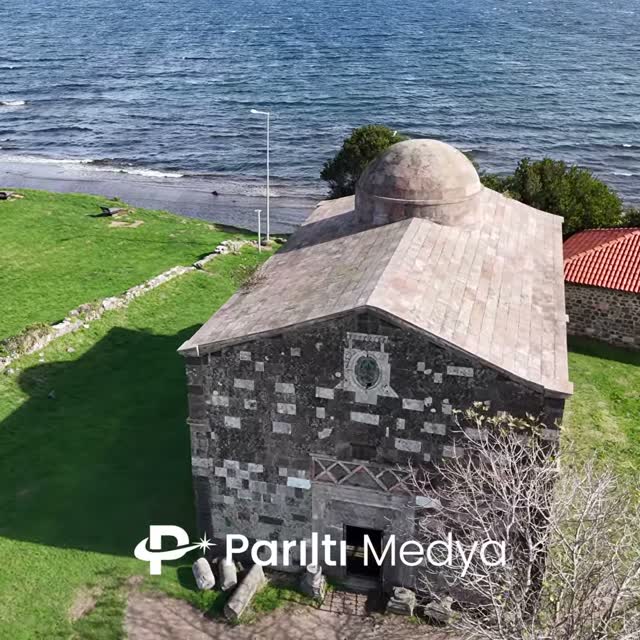
On the Black Sea coast of Ordu, a narrow cape pushes out into open water, and at its tip stands a small stone church with a single dome. This is Yason Burnu, Cape Jason, where a Greek myth, an ancient sanctuary and a 19th-century place of worship share the same patch of grass.
Our film of it lasts twenty seconds: one slow orbit around the building, with the sea behind it. The story of the place is a good deal longer, so we wrote it down.
/ In this story:
At a glance
- Location: Çaytepe village, Perşembe district, Ordu
- Distance: About 28 km from Ordu and 15 km from Perşembe
- Built: 1868 (some sources give 1869)
- Restored: 2004
- Status: 1st-degree archaeological and 2nd-degree natural protected site
Where the cape is
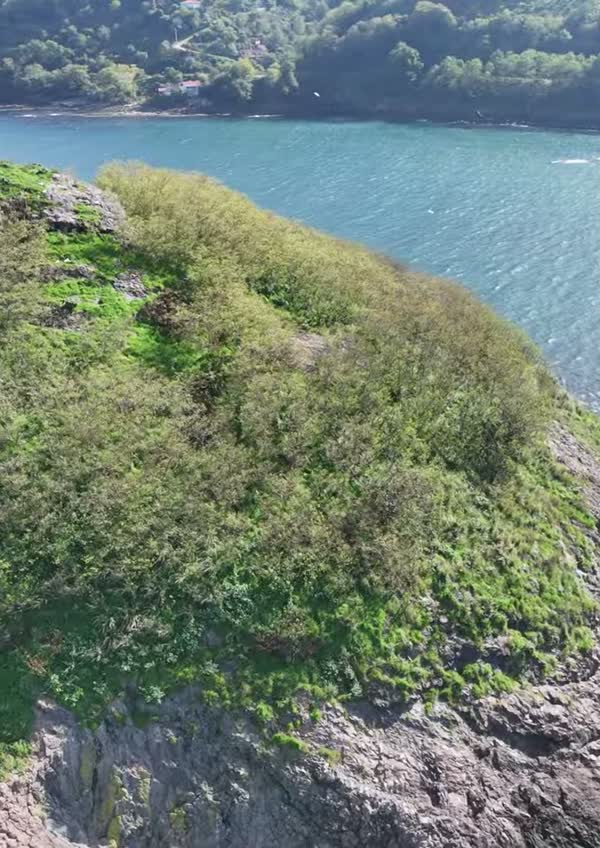
Cape Jason lies in the village of Çaytepe in the Perşembe district of Ordu, roughly 28 kilometres from the city of Ordu and 15 kilometres from the town of Perşembe. It closes the eastern end of the wide bay that holds Fatsa and Bolaman, and researchers describe the headland it belongs to as the largest cape on the Turkish coast east of Sinop.
The old coastal road winds along the shore here, past coves and hazelnut-covered hills, before the land suddenly flattens into a green table of grass surrounded by dark rock. From the air the shape is unmistakable: a low peninsula, a lighthouse, a church and nothing else between them and the horizon.
Jason, the Argonauts and a temple for sailors
The cape takes its name from Jason, the hero of Greek mythology who sailed the Argo across the Black Sea in search of the Golden Fleece. According to the legend, he and his Argonauts moored here on their way east to Colchis. Ancient writers knew the place as Iasonion; the geographer Strabo mentions it, and an earlier coastal guide attributed to Scylax records a Greek acropolis on the spot.
This stretch of the Black Sea was feared by sailors, and tradition holds that a temple dedicated to Jason once stood at the water's edge, where crews made offerings for a safe passage. Archaeologists describe the cape as a sanctuary that stayed in use from antiquity until it was abandoned. Traces of that long life are still visible along the shore, including the remains of an ancient harbour and rock-cut fish pools.
First a temple for sailors, then a church for fishermen. For more than two thousand years, people have come to this cape to ask the sea for mercy.
/ Parilti Media
The church of 1868
The building that stands today is far younger than the myth. It was built in 1868 by the Greek Orthodox community living in the area; some sources, including the provincial culture directorate, give the year as 1869. It went up in the decades after the Ottoman Reform Edict of 1856, which made it easier for non-Muslim communities to build and repair their places of worship.
Some accounts say the church was dedicated to Saint Nicholas, the patron saint of sailors. That would make sense. For centuries this headland had been a place where seafarers asked for protection, and the congregation here was made up of fishermen and families from the nearby coastal villages. In a way the church simply took over the job of the temple.
Stone, dome and symmetry
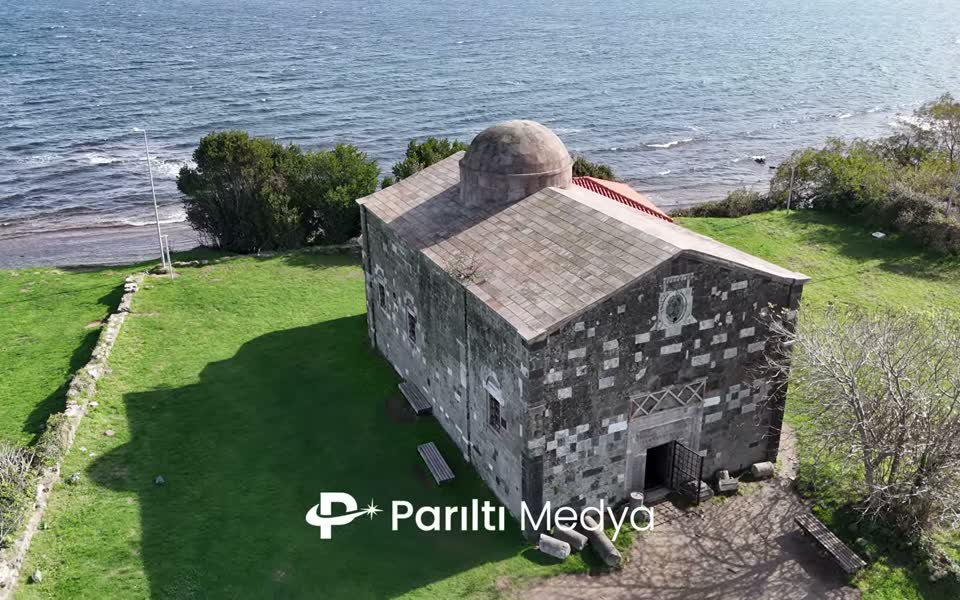
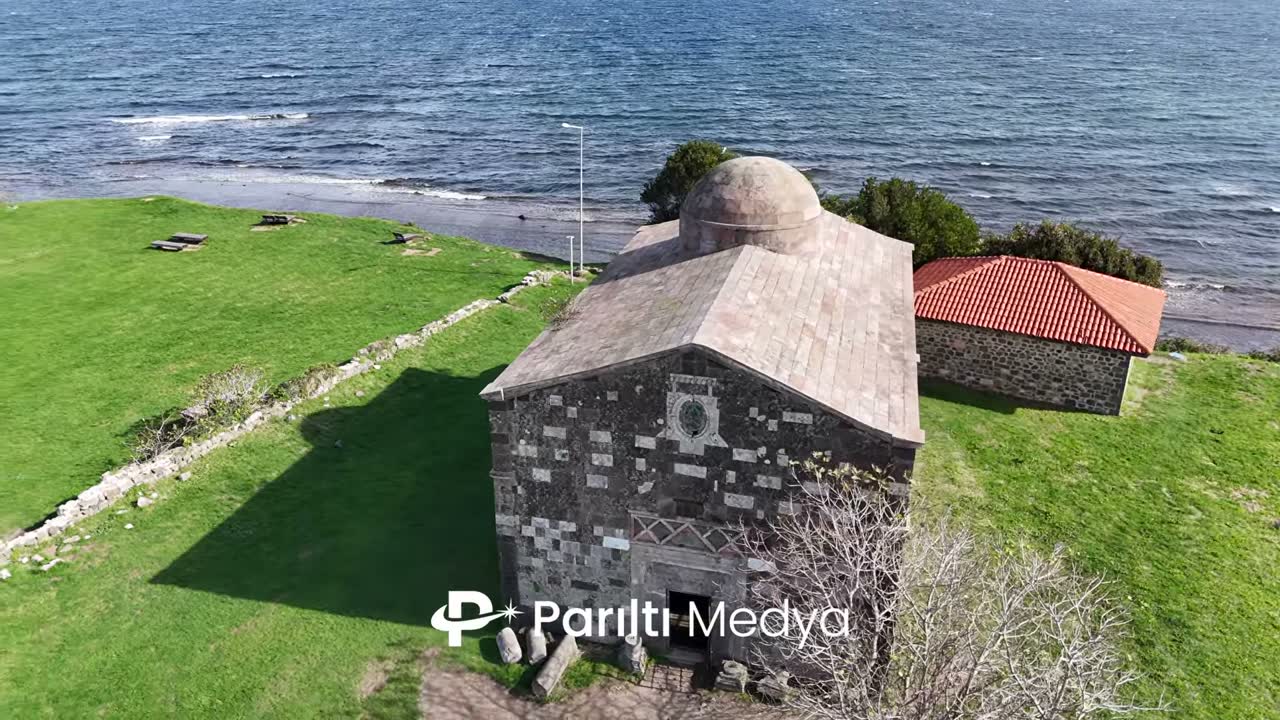
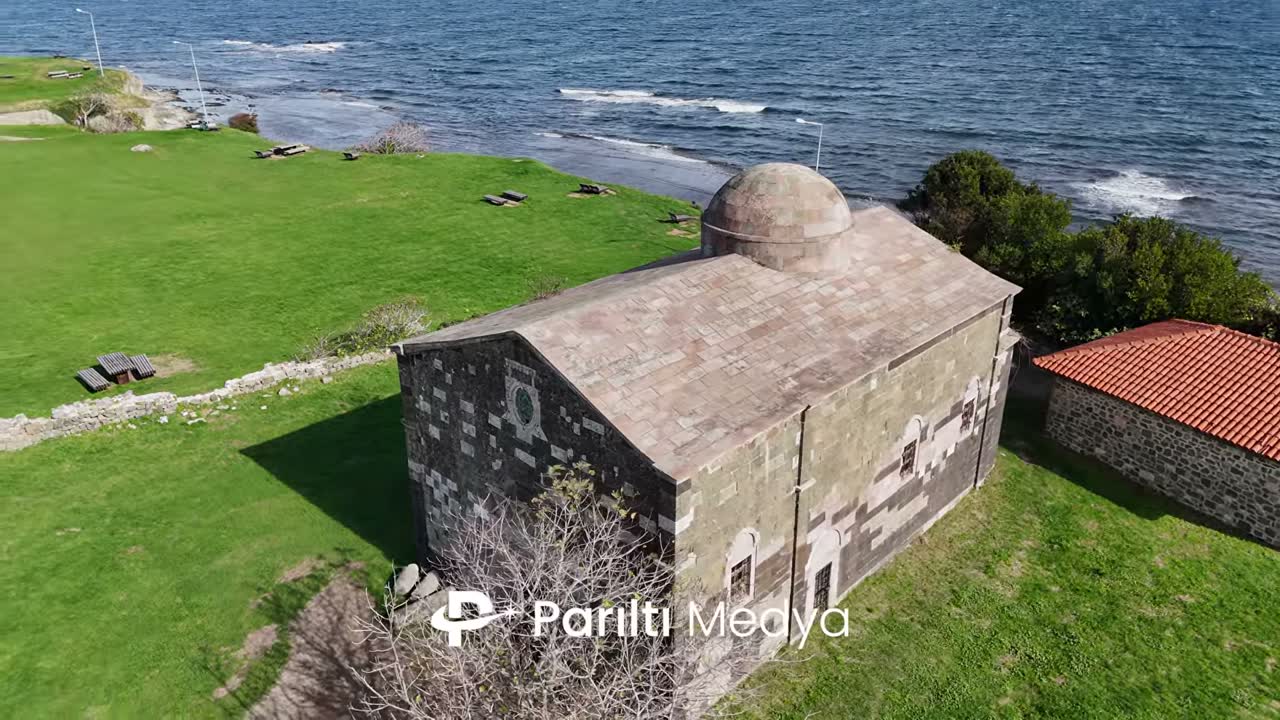
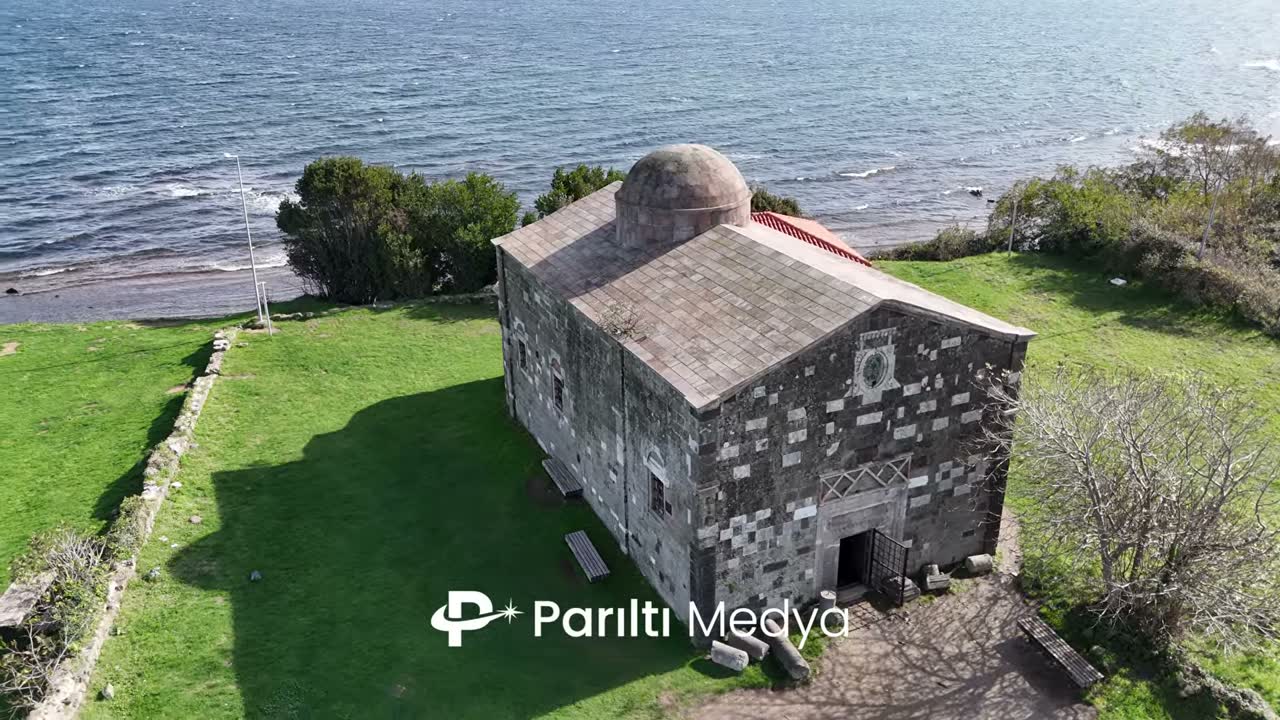
Seen from above, the church is a study in simplicity. It is a compact rectangular building of cut stone under a pitched stone roof, with a single round dome rising at one end. The walls mix dark and pale blocks in a pattern that reads almost like a chessboard, and a carved medallion sits above the entrance.
The thickness of the walls and the lack of decoration say something about the setting. This is a building made to stand in wind, salt and winter storms, on a headland with no shelter at all.
Abandonment and restoration
After the population exchange between Greece and Türkiye in 1923, the community that built the church left the region and the building slowly fell into ruin. It stayed that way for most of the 20th century.
In 2004 the church was restored and the area around it was landscaped and opened to visitors. Today Cape Jason is protected as both a first-degree archaeological site and a second-degree natural site, and it is promoted as the only peninsula on the Black Sea coast with a church standing on it. Official figures quoted in the press put visitor numbers at around 100,000 a year.
Filming it from the air
We kept the film deliberately short. The drone starts at the front corner of the church, close enough to read the stonework, then circles slowly to the side while the camera stays locked on the dome. As the angle changes, the red-tiled roof of the small building next to it comes into view and the sea fills the top half of the frame.
Two things made the shot: a low sun that threw a long shadow of the church across the grass, and waves breaking white along the shore behind it. Stone, grass and sea. The place does not need more than that.
If you go
The cape is an easy detour from the coastal road between Ordu and Fatsa. There is parking, a picnic area and places to eat nearby. Late afternoon is the best time to visit, when the light turns warm and the lighthouse, built in the same period as the church, starts to stand out against the sky. Stay for the sunset if you can.
Sources & further reading
More
films
A Quiet Island in the Blue
Hoynat Island sits a hundred metres off the coast of Perşembe, Ordu. Nobody lives there except the seabirds, and that is exactly why it matters.
Into the Heart of Nature
From a highland pond and open pasture down to the cliffs of the Black Sea: two minutes of nature's untold stories, and a short guide to the landscapes behind them.
The Life of a Log: From Tree Cutting to Carpentry
From a hillside tree to boards on the sawmill floor: a two-minute woodworking journey that follows a single log through every pair of hands.